

“It was the best of times, it was the worst of times.” Charles Dickens’ famous opening sentence in A Tale of Two Cities is an apt description of today. We are living in a period of rapid change, upheaval, and division.
The same could be said about mid-19th-century Wisconsin.
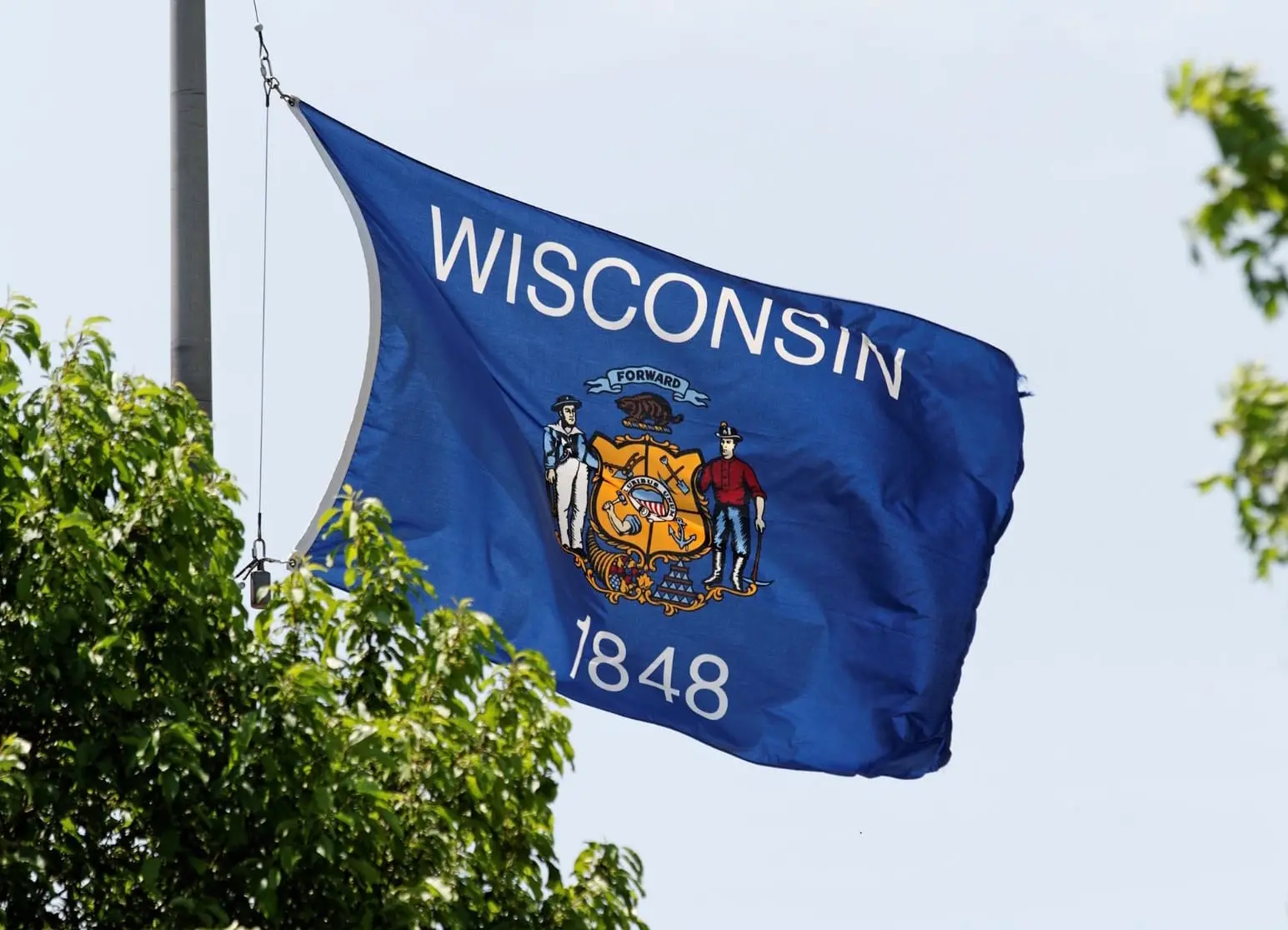
Wisconsin was officially formed as a territory on July 4, 1836, with the goal of becoming a state before the 1848 presidential election. The twelve years leading up to May 29, 1848, when Wisconsin was admitted to the Union as the 30th state, were tumultuous. It took two constitutional conventions to get there.
For ten chaotic and contentious weeks during the state’s first Constitutional Convention in 1946, 124 elected delegates fiercely debated.
Some of the more contentious issues had already been settled by the Northwest Ordinance of 1787 and the Enabling Act. These included prohibition of slavery, civil and religious liberties, land for public schools and universities, voter approval of the constitution and state government, equality with other states, federal responsibilities, and state boundaries.
That still left several unresolved matters. Those differences fell mostly along geographical lines; the eastern and southern delegates’ interests conflicted with those of the northern and western delegates. Sound familiar?
The most controversial issues concerned voting.
Should judges be selected by election or by appointment? Should women be allowed to vote? Should the voting age be lowered to 18 or raised to 25? What documents are needed to prove residency? What documents do immigrants need to prove citizenship? Should the word ‘white’ be deleted from the definition of an eligible voter? Should Black people be allowed to vote?
The final draft of the 1846 constitution incorporated several controversial progressive ideas for the time. Included was an article prohibiting all commercial banking in Wisconsin. There was intense distrust of paper money, and banks were seen as favoring the wealthy elite over farmers.
Another article granted voting rights to immigrants who applied for citizenship in a timely manner and took an oath to uphold the U.S. Constitution. There was also an article that allowed married women the right to own property.
In the end, the delegates brought forward two questions for the voters to decide: Should Black eligible men be allowed to vote? (If yes won, this would be added to the new constitution) Should the new Constitution be adopted?
Both questions failed because they were considered too radical.
In 1847, under Governor Henry Dodge, the legislature convened a new Constitutional Convention. The 69 newly elected delegates started over. The delegates themselves and the convention’s results were more moderate. When a single-ballot question was posed on March 13, 1848, 72% of eligible voters approved the 1848 constitution referendum.
The next step was statehood. On May 29, 1848, Wisconsin was admitted as the 30th state of the United States of America.
The Wisconsin Constitution has been amended 151 times, resulting in more than 200 changes, and has evolved – mostly – to reflect modern social and political needs. Critics, though, have cited a slew of amendments over the past decade as a misuse and even trivialization of the process, viewing them primarily as workarounds by the majority party when it has been unable to get things done through the legislature.
An amendment must be passed by two consecutive legislatures and then ratified by a majority of voters.
Key changes over the course of the state’s history include expanding voting rights, establishing 4-year gubernatorial terms, strengthening the governor’s veto powers, and authorizing recall elections.