
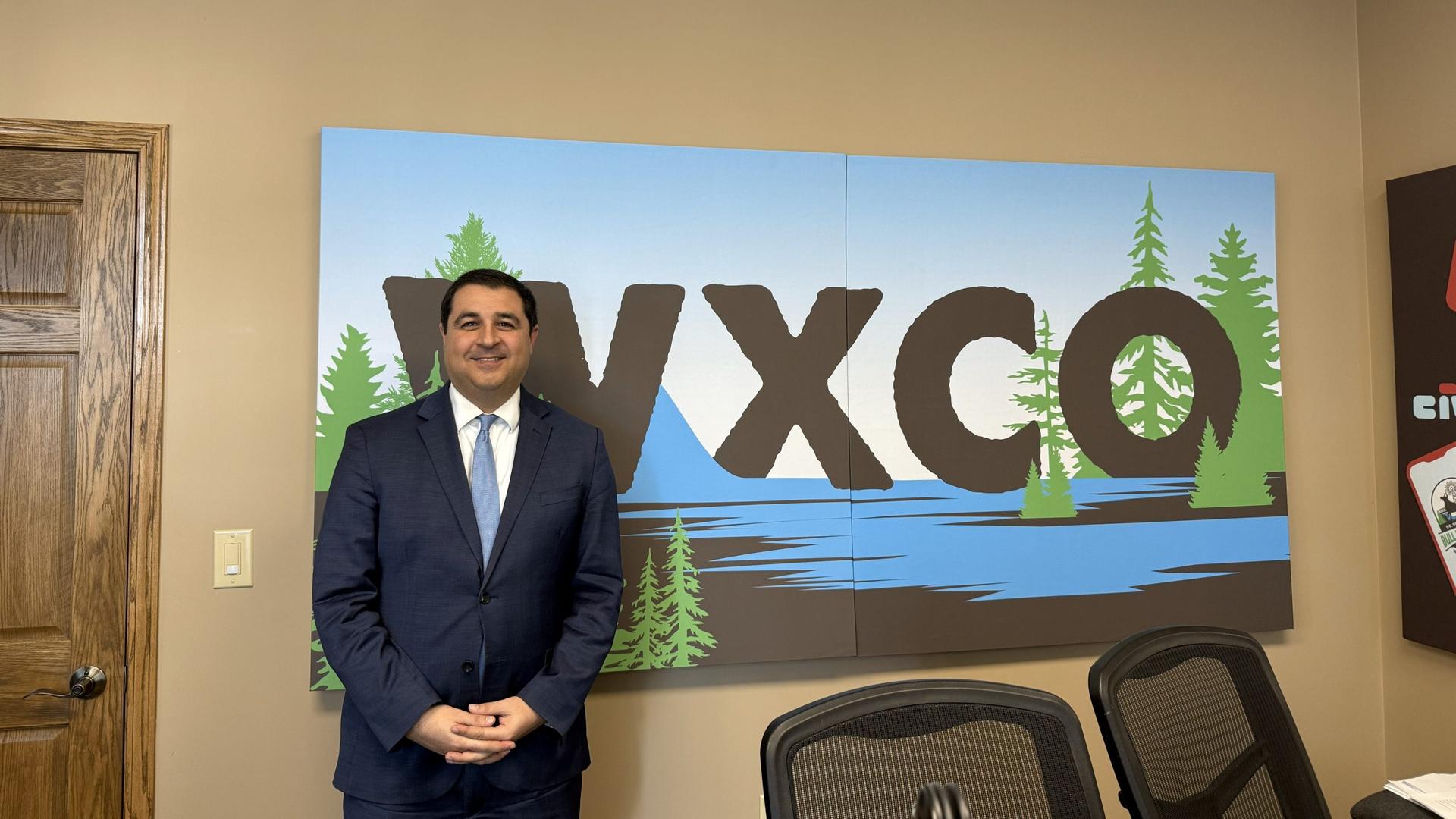
Source: Isabela Nieto
Josh Kaul details Wisconsin’s legal fight against federal actions
From education funding to voter data, Wisconsin AG Josh Kaul describes how federal actions are affecting communities across Wisconsin.

Jan 26, 2026, 5:25 PM CST


Share
Gov. Evers has announced Wisconsin has joined a lawsuit challenging the escalation of federal immigration enforcement in the Twin Cities and in other cities.
The lawsuit urges a judge to grant an injunction, arguing that the emmigration ramp-up has had “the purpose and effect of inflicting maximal harm on state, city, and community institutions.”
On the same day that the lawsuit was announced, Attorney General Josh Kaul joined Civic Media at our Wausau studios, to discuss this and dozens of other lawsuits againt the Trump Administration that have been filed under his watch.
Here’s that interview, edited for clarity and brevity.
What can you share about Wisconsin joining a lawsuit supporting Minnesota against the Trump administration?
Minnesota has challenged actions involving ICE and other Department of Homeland Security agents, including alleged abuses. Wisconsin filed a brief along with a number of other states supporting Minnesota’s position.
There is deep concern about what is happening in Minneapolis and the surrounding area. The community appears to be targeted in a way that is inconsistent with constitutional values. Preventing similar actions from happening in Wisconsin is critical, and stopping this conduct as early as possible reduces the likelihood it spreads elsewhere.
What does the brief mean when it says the issue is not immigration enforcement but harm to state and community institutions?
The federal government is responsible for enforcing immigration laws, and different administrations approach that responsibility differently. What is happening in Minneapolis, however, is not about immigration enforcement.
It is about causing fear in an American city and punishing a community and a state. References to demands such as releasing voter rolls demonstrate that these actions are not about immigration but about intimidation and control.
This raises serious state sovereignty concerns. The system of independent state and federal governments exists to protect liberty. States must be able to stand up to the federal government when it acts in ways that undermine constitutional principles, and that independence is playing an important role here.
Has it become more difficult to maintain public trust in the justice system amid recent national developments?
There are real concerns about accountability. A Supreme Court decision granting broad presidential immunity for certain official acts has contributed to a sense of impunity. Presidential pardons for serious offenses and the perception that wealth and connections provide outsized influence also undermine trust.
Despite this, the rule of law remains foundational. Without it, arbitrary decisions would govern people’s lives. Pushing back against unlawful and arbitrary actions is essential, and that is what Wisconsin has been doing consistently.
Why has Wisconsin joined more than 40 multistate lawsuits, and what issues do they cover?
The lawlessness has been widespread, and the lawsuits address a broad range of issues. Many involve unlawful attempts to cut funding that Congress has already approved and that the executive branch is legally obligated to distribute.
Examples include attempts to freeze education funding, dismantle AmeriCorps, impose unlawful conditions on grants, and force state and local law enforcement to participate in federal immigration enforcement.
There are also serious data privacy concerns, including efforts to collect information about SNAP recipients, health care program participants, and voter data. While many cases have been successful, the sheer number reflects how many areas require pushback.
What is the legal issue surrounding federal requests for state voter data?
In Wisconsin and several other states, the federal government has requested voter data. Wisconsin’s election commission voted not to provide it, citing state law.
While some voter file information is publicly available for purchase, sensitive personal information such as Social Security numbers is protected and cannot be disclosed. Wisconsin’s election system is well-tested, with multiple recounts confirming its accuracy.
These requests stem from persistent conspiracy theories about past elections and are part of a broader and concerning effort to collect extensive personal data, raising serious privacy and civil liberties issues.
How do these lawsuits affect everyday Wisconsinites?
Funding cuts have a direct impact. Education funding, AmeriCorps, medical research, and disaster mitigation programs all support local communities and public safety.
One lawsuit challenges a provision targeting Planned Parenthood by forcing a choice between providing general reproductive health care and offering abortion services. That provision temporarily shut down abortion services in Wisconsin. The challenge argues that this action improperly targets protected political speech and unlawfully infringes on rights.
Is the judicial system functioning effectively during this period of conflict between states and the federal government?
Overall, the courts have responded effectively. Many high-profile federal actions receive widespread attention, but court orders blocking those actions often receive far less coverage.
Lower courts have played a crucial role by issuing emergency and preliminary orders that halt unlawful conduct. In many multistate cases, courts have either blocked actions or prompted the administration to back down.
The Supreme Court presents a more mixed picture. While some decisions have expanded executive power in concerning ways, there are reasons for optimism in cases involving tariffs, Federal Reserve independence, and birthright citizenship. The court system, particularly at lower levels, has largely functioned as a meaningful check.
What successes have come from these legal challenges?
Many federal actions were abrupt and disruptive, particularly funding freezes that left schools and agencies scrambling. In response, courts were asked for emergency relief to block those actions while cases proceed.
In several instances, courts granted that relief. In others, the administration reversed course before court orders were issued. These tools have been used strategically to stop harmful actions when timing was critical.
What is the role of the Department of Justice across Wisconsin, including in north central regions?
The Department of Justice’s Division of Criminal Investigation handles crimes of statewide importance, including homicides, sexual assaults, arson, fraud, and internet crimes against children.
DCI offices operate throughout the state and work closely with local law enforcement. Their expertise and partnership help keep communities safe and ensure serious crimes are thoroughly investigated.
How can the public better understand these complex legal cases?
The Department of Justice communicates regularly about major developments, especially when court orders fundamentally change policy or block federal actions.
Key moments to watch for are court decisions that enjoin or block policies. Public updates, official releases, and departmental resources are intended to help people understand what is happening and why it matters.

Isabela Nieto is a reporter for Civic Media based in Wausau, where she reports for WXCO/Bull Falls Radio. She moved to central Wisconsin after stints reporting local and state news in Illinois. Reach her at [email protected].
Want More Local News?

Civic Media
Civic Media Inc.
The Civic Media App
Put us in your pocket.