

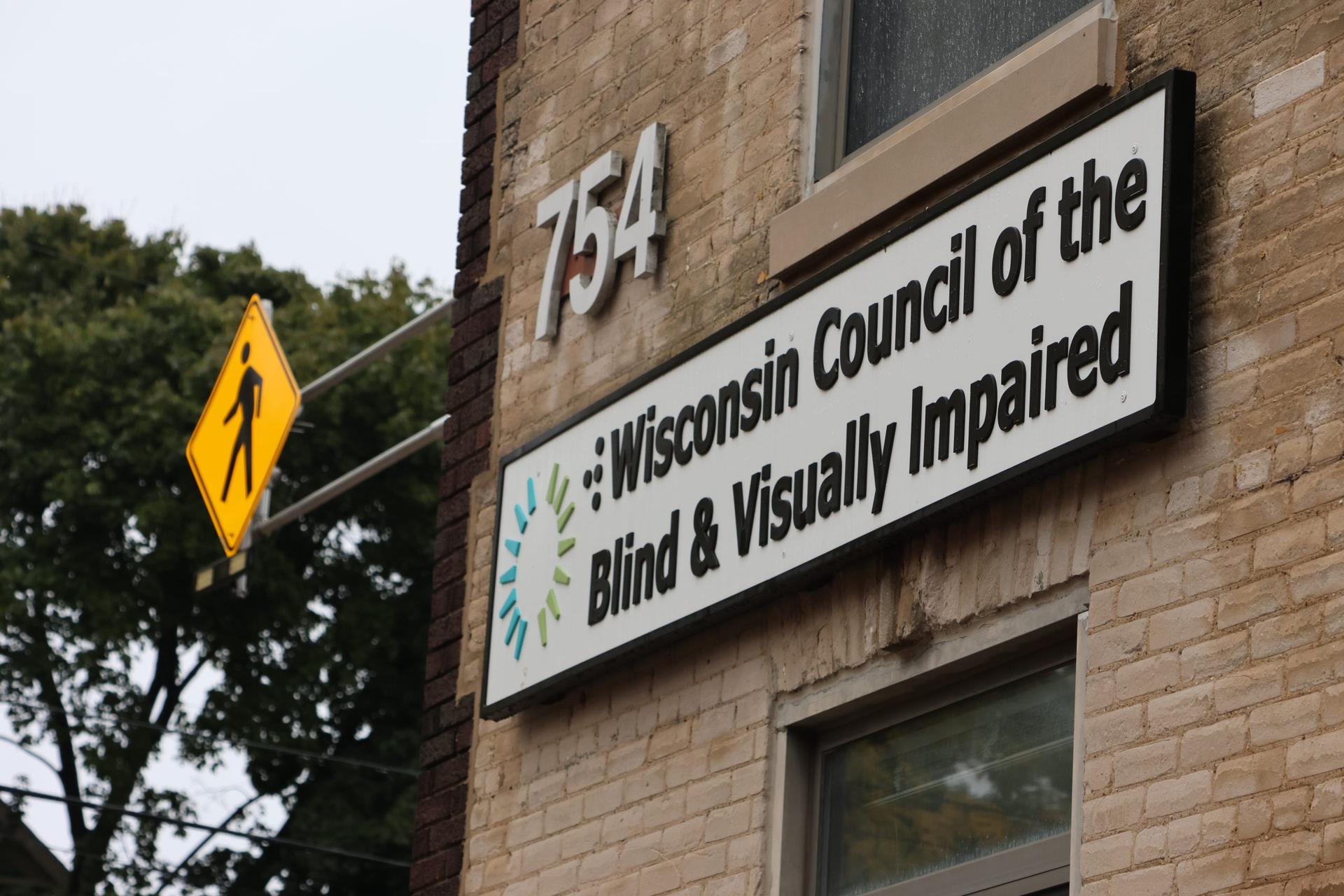
Source: Chali Pittman / Civic Media
Give extra room: Oct. 15 is White Cane Safety Day
White Cane Safety Day has been around for sixty years, and recognizes people who are blind or have visual impairments. It's also a reminder to motorists to stop ten feet away from people carrying a white cane.

Oct 15, 2025, 10:24 AM CST


Share
WISCONSIN (CIVIC MEDIA) – Today is National White Cane Safety Day, which recognizes people who are blind or have visual impairments.
The day was first signed into law over 60 years ago by former U.S. President Lyndon B. Johnson. It’s a reminder that every state has a White Cane Law, which protects the right-of-way for blind or visually impaired pedestrians.
Including Wisconsin, where motorists are required to stop no shorter than 10 feet from a pedestrian who is in a roadway and is carrying a white cane or using a service animal.
Denise Jess is Executive Director of the Wisconsin Council of the Blind & Visually Impaired. She herself is blind and carries a foldable white cane. She says reminding drivers to take extra caution benefits all people.
“We don’t want drivers running over pedestrians, period. But vulnerable people who really can’t see you coming, really need extra protection under the law.”
Wisconsin’s White Cane Law comes with a fine. And even though it’s not against the law, Jess says it’s also not helpful to honk to get pedestrians to speed up.
“Honking is confusing. We don’t know if you’re honking at us. Are you honking to give us information? Are you honking that you’re irritated that you had to stop? While it’s not statutorily required, it’s just confusing. We don’t know how to interpret it.”
Jess says care and attention while on the road doesn’t only benefit folks who are blind or low vision. It also benefits you as a driver.
“We do not see you, or we don’t see you well enough, to be able to predict your movements. Having you follow the rules of the road is just so critical to our safety, and your well-being. If you were to hit one of us, it would change your life as well, and we wouldn’t want that to happen.”
October is also National Pedestrian Safety Month, which aims to reduce pedestrian fatalities and injuries. Jess points out that we are all pedestrians at some point in our transportation.
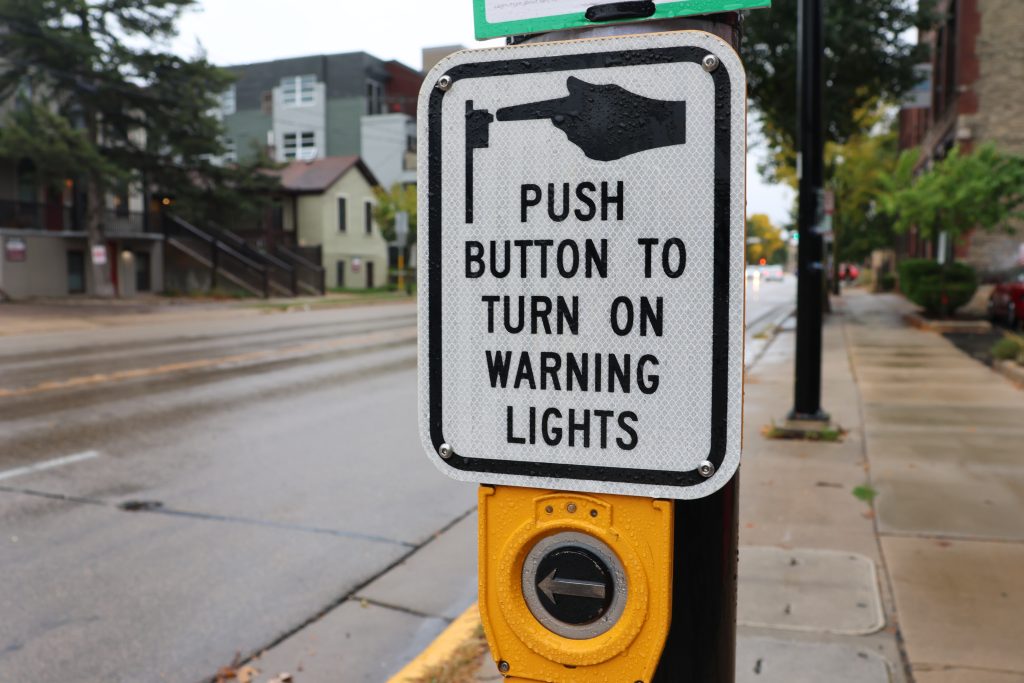
Other initiatives to help people who are blind or visually impaired help all pedestrians, in all walks of life. For example, pedestrian push buttons at crosswalks—which provide flashing lights for drivers and auditory instructions for pedestrians.
As for white canes themselves, well, Jess says there are several types of white canes used by people in the blind and visually impaired community.
An identity cane is a lightweight cane used mostly by folks with high-functioning vision.
Long canes are foldable or rigid, and can be swept from side to side. They typically have a shock cord inside of them to transfer vibrations up the cane.
And a stability cane can be more like a walking cane, used for folks who have mobility or balance issues.

Chali Pittman is Civic Media’s News Director. She’s worked for over a decade in community and nonprofit news, most recently leading news and talk programming at community radio WORT in Madison. Reach her at [email protected] or (608) 616-2240.
Want More Local News?

Civic Media
Civic Media Inc.
The Civic Media App
Put us in your pocket.